Learning how to perform a cutback in surfing is an important step for surfers who want to progress beyond simply riding along the face of a wave. This manoeuvre allows you to change direction, return towards the wave’s most powerful section, and continue riding with better speed and control.
Although the movement may look like one smooth arc, a successful turn depends on several things happening together. Timing, stance, body rotation, rail engagement, and weight distribution all affect how efficiently your board responds.
Whether you are starting to practise this technique or trying to make your turns smoother, understanding the fundamentals can help you use more of the wave and improve your overall surfing.
What Is a Cutback in Surfing?
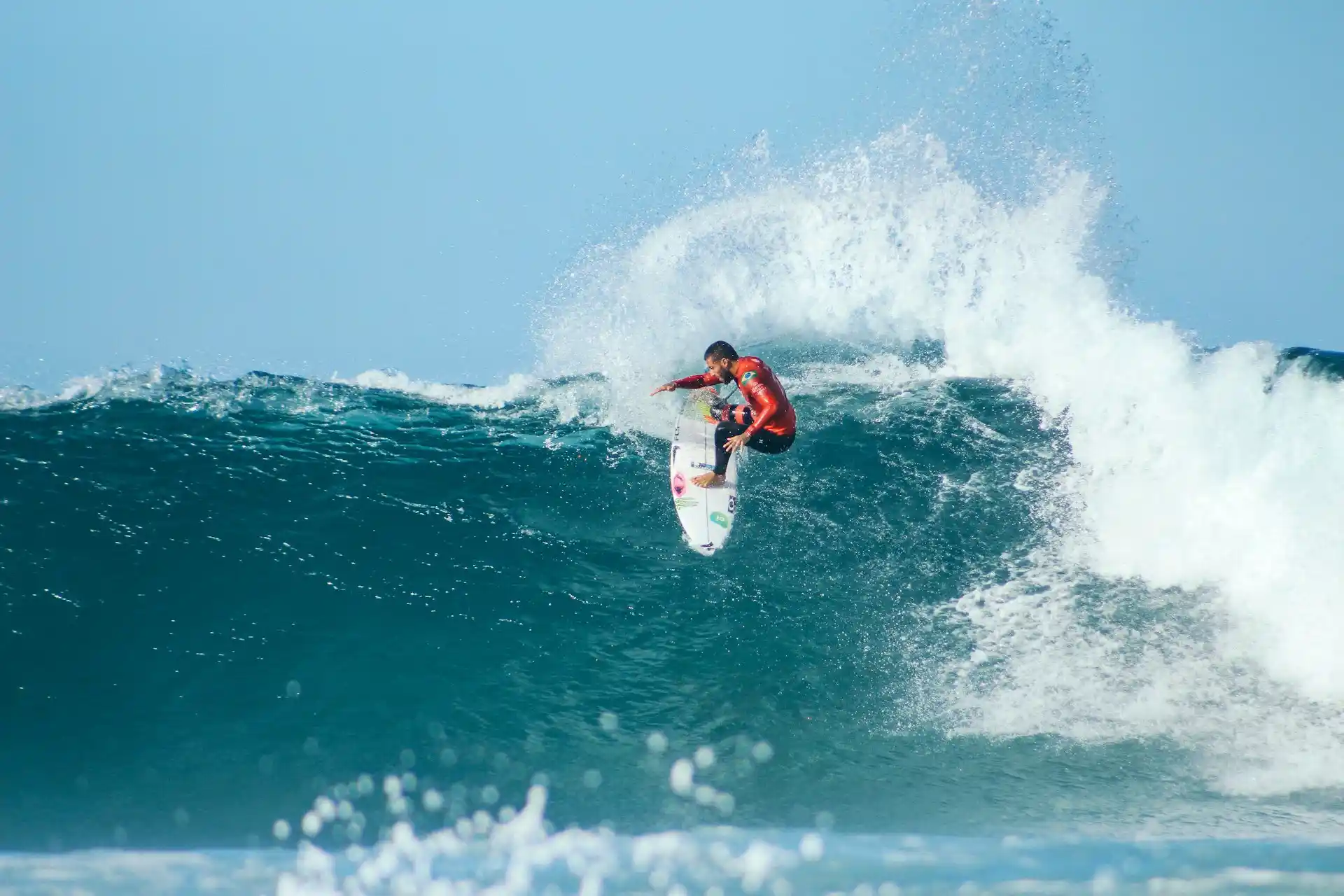
A cutback is a surfing manoeuvre where you redirect your board towards the breaking part of the wave. As you travel along the face, you may occasionally move faster than the wave is breaking. This can take you away from the pocket, where much of the wave’s usable energy is concentrated.
Instead of continuing into a weaker section, you turn back towards the whitewater or breaking area. From there, you can redirect the board once again and continue down the line. The goal is not simply to create an impressive-looking turn. It helps you stay close to the power of the wave while maintaining flow and momentum.
When Should You Perform One?
Timing is one of the most important parts of the manoeuvre. Generally, this turn becomes useful when you have generated enough speed but notice that you are moving away from the pocket into a softer section of the wave.
If the wave is breaking quickly ahead of you, maintaining speed or pumping down the line may be more appropriate. When the section begins to slow down, however, it may be the right moment to redirect towards the power source.
Look ahead instead of focusing only on your surfboard. Reading the wave will help you recognise when there is enough open face to draw a clean, controlled arc.
How to Do a Surfing Cutback Step by Step?
A smooth surfing cutback relies on coordination rather than simply pushing hard on the back foot.
1. Build Speed Before Starting the Turn
Enter the manoeuvre with momentum.
Trying to turn when your board is already slowing down often creates a weak arc or causes the board to stall. Generate speed along the wave face first, then initiate the change of direction as you approach a softer section.
Think of the manoeuvre as redirecting existing speed rather than trying to create speed halfway through the turn.
2. Position Your Back Foot Correctly
Your back foot gives you greater control over the tail and fins of the surfboard.
Before initiating the turn, place your back foot towards the rear of the board, ideally near the raised section of the tail pad if your board has one. This gives you more leverage when changing direction.
However, avoid keeping all your weight permanently on the back foot. Too much pressure on the tail can slow the board and make the movement feel forced.
3. Compress Your Body
Bend your knees and lower your centre of gravity as you prepare to turn.
A compressed stance provides greater stability and allows you to apply pressure more effectively through the rail. Keeping your knees flexible also helps you adjust to changes in the wave face.
Avoid bending mainly from your waist. Your knees and hips should remain active throughout the movement.
4. Look Towards the Direction You Want to Go
One of the simplest ways to improve your surfing turns is to use your eyes.
As you begin to redirect the board, look back towards the breaking section. Your head should turn first, followed naturally by your shoulders, hips, and surfboard.
Your arms can also help guide the rotation. Pointing or reaching towards the section you want to return to often makes the movement feel more fluid.
A useful rule is simple: where you look, your body and board are more likely to follow.
5. Rotate Through Your Shoulders and Hips
Avoid trying to steer the surfboard using only your feet.
Begin rotating your upper body towards the pocket. Allow your shoulders and hips to follow your line of sight while maintaining pressure through the rail.
The movement should feel connected rather than forced. When your upper body rotates smoothly, the surfboard is more likely to follow through the arc naturally.
6. Engage the Rail
A proper carving turn uses the surfboard’s rail rather than relying only on the fins.
Instead of pivoting sharply from the tail, lean into the manoeuvre and allow the inside rail to engage with the water.
Keep your weight balanced enough to preserve momentum. Excessive back-foot pressure can cause the board to lose speed before you complete the turn.
The aim is a smooth arc rather than an abrupt change of direction.
7. Redirect Towards the Open Face
As you approach the breaking section or whitewater, prepare to change direction again.
Shift your focus back down the line and allow your shoulders and hips to rotate towards the open face. Depending on the wave, you may make light contact with the foam before redirecting.
Stay loose through the transition and allow the energy of the wave to help push you back into position.
Frontside vs Backside Cutbacks
The mechanics can feel different depending on whether you are surfing frontside or backside.
Frontside Cutback
During a frontside turn, your chest initially faces the wave. Redirecting back towards the whitewater generally requires more upper-body rotation.
Using your leading arm to point towards the section you want to reach can help initiate the movement and guide your shoulders through the arc.
Backside Cutback
Many surfers find backside turns more natural because the rotation brings the body towards the wave.
Keep your knees bent and use your shoulders and trailing arm to guide the movement while maintaining pressure through the rail. Staying centred over the board will also help you keep control as you change direction.
Common Mistakes to Avoid
Even small technique problems can interrupt an otherwise good turn. One common mistake is starting without enough speed. Without sufficient momentum, the board may stall halfway through the manoeuvre.
Another is keeping the back foot too far forward, which reduces your leverage over the tail and makes tighter turns more difficult. Surfers also frequently forget to bend their knees and remain too upright. This limits both balance and control. Another common problem is trying to pivot entirely from the tail instead of allowing the rail to carve through the water. This can produce a sharp but slow turn rather than a smooth arc.
Finally, avoid staring at your surfboard. Remember to look where you want to go. Your head, shoulders, hips, and board should progressively follow your line of sight.
From a Standard Turn to a Roundhouse Cutback
Once you can redirect towards the pocket smoothly without losing too much speed, you can begin developing a roundhouse cutback.
This variation extends the manoeuvre into a wider arc, bringing the surfer farther back towards the whitewater before redirecting towards the open face.
The same fundamentals still apply: enter with speed, engage the rail, rotate your body, maintain balanced pressure, and keep your eyes focused on the section you want to reach.
Rather than rushing into a full 180-degree turn, practise making smaller arcs smooth and controlled first. A clean standard turn provides the foundation for more advanced surfing manoeuvres.
How to Maintain Speed Through the Turn
Speed management is one of the biggest differences between a smooth manoeuvre and one that stalls.
Enter the section with enough momentum, keep your body centred, and avoid placing excessive weight on the tail for too long. Once the board begins carving, allow your weight to become more balanced so the rail can continue moving efficiently through the water.
Wave selection also matters. Softer waves may allow you to travel closer to the whitewater, while more powerful waves often require a quicker and more controlled redirect.
Over time, you will learn how much pressure and rotation each type of wave requires.
Final Thoughts
Mastering a cutback in surfing can improve the way you position yourself on a wave. Instead of simply travelling towards the shoulder, you can redirect towards the pocket, reconnect with the wave’s energy, and set yourself up for the next section.
Focus on entering the manoeuvre with speed, positioning your back foot correctly, bending your knees, rotating through your shoulders and hips, and allowing the rail to do much of the turning.
Most importantly, learn to read the wave. A technically correct manoeuvre performed at the wrong moment will rarely feel as smooth as a simple turn performed in the right section.
With regular practice, recognising when to accelerate, when to redirect, and how tightly to carve will gradually become more instinctive. If you are looking to keep developing your surfing while spending time in Bali, Flow State Bali can be a natural part of that journey, giving you more opportunities to get in the water, practise with intention, and enjoy the process of progressing one wave at a time.