Learning to stand up on a surfboard is one of the first milestones for any beginner surfer. Known as the surf pop-up, this movement takes you from lying on your board to standing in a balanced position as you ride a wave. Getting the timing, foot placement, and coordination right takes practice, but you can build the necessary skills before entering the water.
In this guide, you will learn how to pop up on a surfboard step by step, correct common technique mistakes, and practise useful drills on land. These fundamentals will help you prepare for your first waves and build a foundation for further surf training.
What Is the Pop Up in Surfing and Why It Matters
A pop-up is the transition from lying on your stomach to standing on your surfboard. It happens after you paddle into a wave and build enough forward momentum to ride it.
A consistent pop-up helps you establish a balanced stance, maintain control, and make the most of a wave. For beginners, the main goals are correct positioning, smooth movement, and reliable timing rather than speed alone.
Before the Pop Up: Board Position and Paddling Speed
Your position on the board and paddling technique affect how easily you can stand up. If your weight is poorly distributed or you lack forward momentum, even a well-executed pop-up may not help you catch the wave.
Find the Correct Position on Your Board
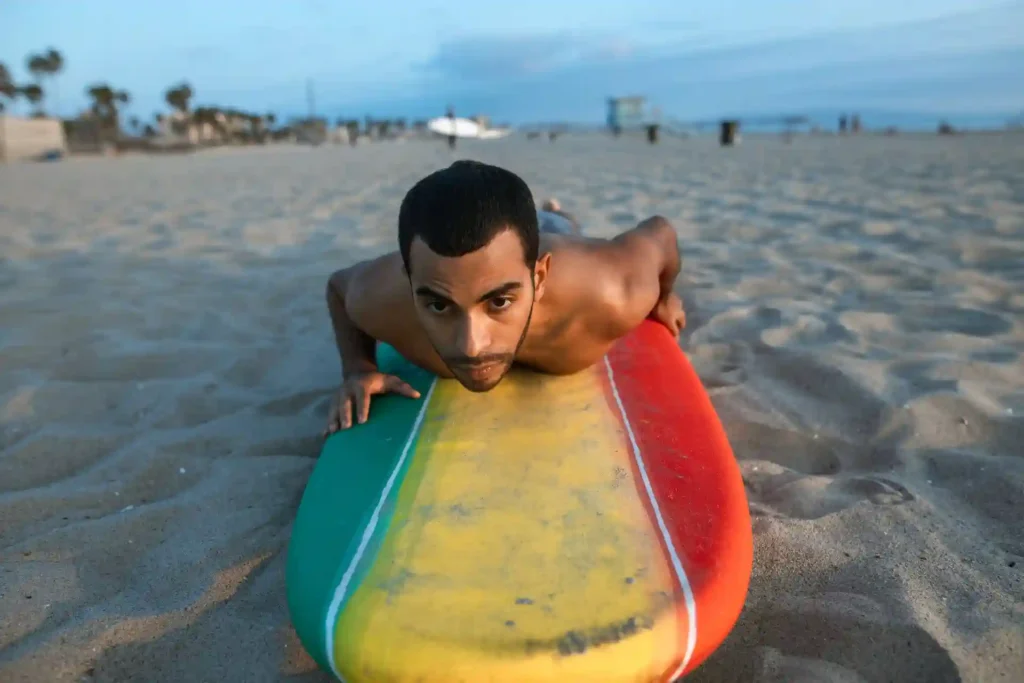
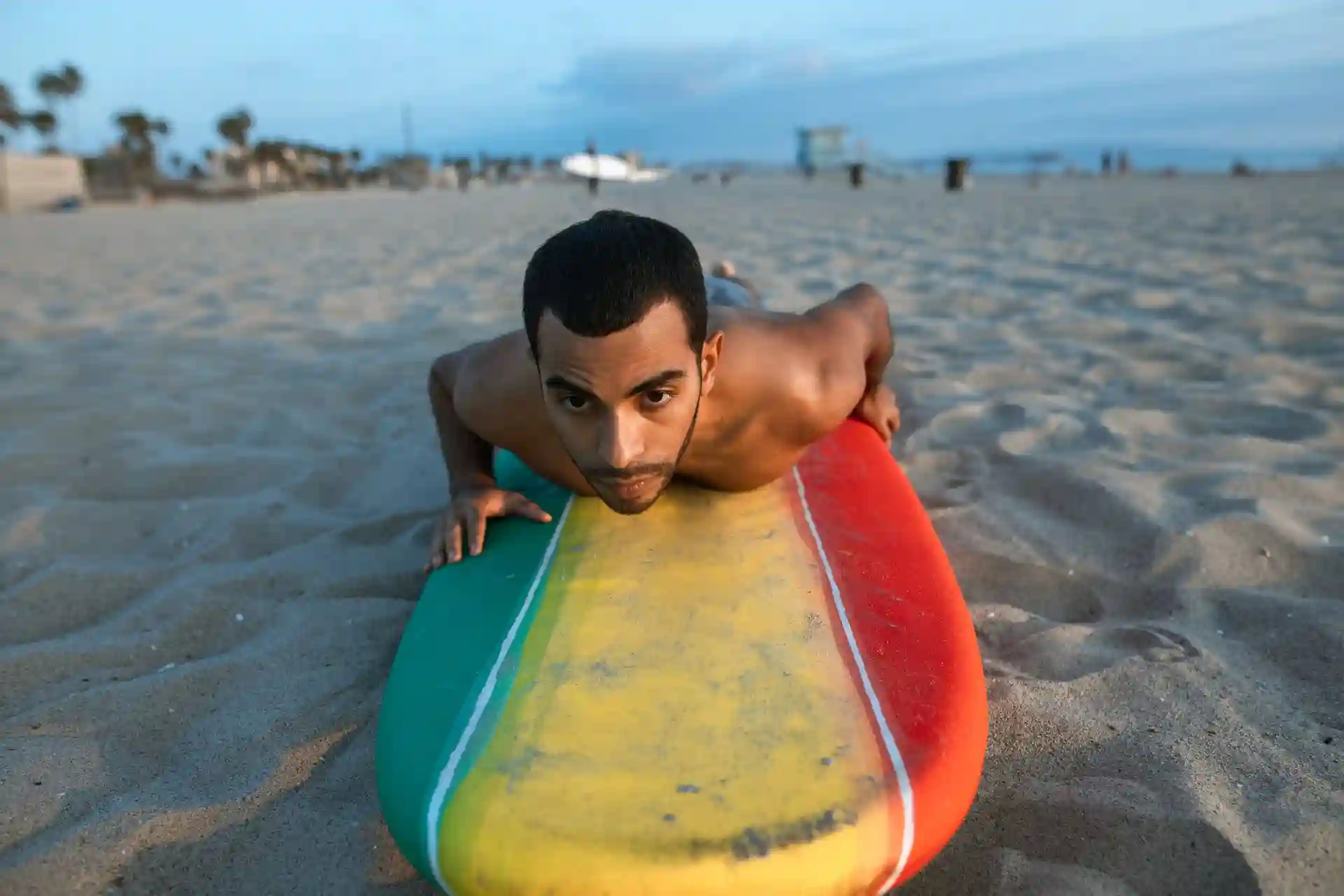
Lie along the board’s stringer, the line running down its centre. Keep your chest slightly lifted, your head looking forward, and your legs relatively close together.
Your weight should allow the board to sit reasonably level. If the nose dips underwater or rises excessively, adjust your position. The ideal placement depends on your body size and board shape, so ask an instructor for guidance if you are unsure.
Build Enough Paddling Speed
Use controlled, efficient strokes to build momentum while keeping your body stable. When a suitable wave begins lifting and carrying your board forward, continue paddling as needed before transitioning into your standing position.
Standing too early can cause you to lose the wave, while waiting too long may leave insufficient time to get your feet underneath you. With practice, you will become more familiar with the feeling of a wave carrying your board.
How to Pop Up on a Surfboard Step by Step
Start by practising the following sequence on land. A two-stage movement can help beginners understand foot placement before progressing to a continuous one-step pop-up.
1. Place Your Hands Under Your Chest
From the paddling position, place your palms flat on the board beneath your chest, around the lower-rib area. Keep your fingers spread comfortably and avoid grabbing the rails, or sides, of the board.
2. Push Your Upper Body Up
Press through your palms to lift your chest and create space for your legs. Keep your elbows relatively close to your sides and avoid holding a prolonged push-up position.
3. Bring Your Back Foot Forward
For a two-stage pop-up, bring your back foot underneath your body first. You may briefly use your knee during this progression. Aim to position your foot near the centre line of the board rather than leaving your leg stretched behind you.
4. Bring Your Front Foot Forward
Move your front foot underneath your chest and towards the front half of the board. Both feet should land across the centre line, roughly shoulder-width apart as a starting point.
Your front foot usually angles slightly forward, while your back foot turns out more towards the side. Adjust your stance to suit your body and board.
5. Stand and Look Ahead
Rise into a low, balanced stance with bent knees, a relatively upright torso, and relaxed arms. Look towards the direction you want to travel instead of checking your feet.
Avoid locking your knees or bending excessively at the waist. A stable stance gives you more room to adjust to the board’s movement.
Source: Pexels
Common Pop Up Mistakes and How to Fix Them
Falling during practice is normal. Identifying what went wrong helps you make more targeted adjustments.
Looking at Your Feet
The problem: Looking down can change your posture and make balancing more difficult.
How to fix it: Choose a fixed point in front of you during land practice and keep your eyes on it throughout the movement.
Dragging Your Knee Across the Board
The problem: Relying heavily on your knees can slow the transition into your standing stance.
How to fix it: Practise bringing your feet underneath your body with control. A brief knee-assisted progression can be useful initially, but work towards placing both feet without resting your knees on the board.
Grabbing the Rails
The problem: Holding the sides of the board can interfere with an efficient push-up and make your movement less consistent.
How to fix it: Place your palms beneath your chest, close to the centre line, and rehearse this position before each repetition.
Popping Up Too Early or Too Late
The problem: Standing before the wave provides enough momentum can cause you to lose speed. Waiting too long can leave insufficient time to get into position.
How to fix it: Continue paddling as needed and begin your pop-up when you feel the wave lifting and carrying your board. A coach can help you recognise the right timing.
Landing in an Unstable Stance
The problem: Straight legs, a very wide stance, or a bent-over posture can make it harder to adjust to the board’s movement.
How to fix it: Keep your knees bent, position your feet across the centre line, and maintain a relatively upright torso. Practise holding your final stance for several seconds.
How to Practise the Pop Up on Land?
Land drills help you develop consistency without having to manage waves and paddling at the same time.
Step 1: Prepare Your Practice Space
Choose a clear, flat surface with enough room to move safely. Use a non-slip exercise mat or level sand, and mark a centre line if it helps you visualise your board position.
Step 2: Rehearse the Starting Position
Lie on your stomach as though you are paddling. Keep your body centred, your legs relatively close together, and your head lifted. Place your hands beneath your chest before beginning the movement.
Step 3: Practise the Full Movement
Push through your hands and bring your feet underneath your body. Start with a controlled, two-stage pop-up if needed, then work towards a continuous movement as your coordination improves.
Step 4: Hold Your Final Stance
After each repetition, hold your surfing stance for three to five seconds. Keep your knees bent, look ahead, and check whether your weight feels balanced across both feet.
Step 5: Repeat and Review
Begin with five to ten controlled repetitions, resting when needed. If possible, record a short video from the side to review your hand placement, foot positioning, and posture. A qualified surf coach can help identify adjustments.
When to Move to a One-Step Pop Up
A one-step pop-up brings both feet underneath your body in one continuous movement. It is a progression to work towards once you understand the basic sequence.
You can begin practising it on land when you can consistently place your hands correctly, land your feet in a stable position, and finish without immediately losing balance.
You do not need perfect technique before trying the one-step variation. However, prioritise control over speed, and adapt the progression to your mobility and current ability.
Learning the Pop Up in a Structured Program
Land practice builds familiarity with the movement, but surfing also requires wave timing, board control, and awareness of ocean conditions. Structured coaching can help you connect these skills through observation and feedback.
Flow State Bali’s Beginner Program includes foundational skills such as pop-up technique and standing fundamentals. Its planned three-day intensive foundation is designed to give beginners a structured starting point.
Confirm current program availability directly with Flow State Bali. If you are planning a future surf trip, join the waitlist for updates about upcoming coaching opportunities.
Before entering the water, choose conditions appropriate for your experience, use suitable equipment, and follow your instructor’s safety guidance.
FAQ: Pop Up Surfing for Beginners
How long does it take to learn a surf pop-up?
Progress varies with coordination, mobility, fitness, and practice frequency. Some beginners become comfortable with the basic movement quickly, while others need more time to perform it consistently in the water.
Why do I keep falling when I pop up?
Common causes include poor hand placement, incorrect timing, unstable foot positioning, looking down, and standing too upright. Recording your practice or asking an instructor to review your technique can help identify the cause.
Should beginners use a two-step or one-step pop-up?
A two-step pop-up helps beginners learn the sequence gradually. A one-step pop-up combines the movement into a continuous transition. Choose the progression that matches your current ability.
Can I learn pop-up surfing without going into the water?
Yes. Land drills help you practise coordination, hand placement, and stance. However, they cannot fully replicate wave timing and balance, so combine them with appropriate instruction in the water.
How many pop-ups should I practise each day?
Start with five to ten controlled repetitions and adjust according to your comfort and fitness. Focus on technique rather than volume, take breaks when needed, and stop if you experience pain.
Build Your Surfing Foundation One Pop-Up at a Time
A reliable pop-up starts with the right board position, efficient paddling, correct hand placement, and a balanced landing. Practise these fundamentals on land, review your technique, and work towards a smoother one-step movement as you improve.
Planning to learn to surf in Bali? Explore Flow State Bali’s guide to surf training exercises and join the waitlist for the Beginner Program to receive updates about upcoming coaching opportunities.
Before you paddle out, review the basics of surf etiquette and make safe decisions in the water. A strong foundation will help you approach each new wave with greater confidence.